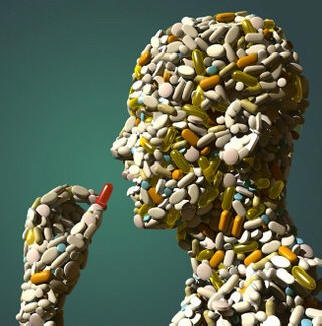
Pharmajuana Rising
By: Michael A. Martin “I was under medication when I made the decision not to burn the tapes.” - Richard M. Nixon Big Pharma does not want their customers dead or cured. Much like Big Finance, they want a growing, captive market of reliable, repeat customers, i.e. drug therapy maintenance programs. ___________________ SSRI addiction? “Just stop taking’em and see what happens. I’d rather be jonesing off heroin any day.” - Juan Dillinger Use of Antidepressants has jumped nearly 400% since 1988: 11% of Americans, 12 years+ take Antidepressants (2005-08 study). 23% of women in their 40s and 50s take Antidepressants. (CDC, Harvard Health Blog) “… 80 percent of each antidepressant drug (studied) passes through the human body without being broken down, which is why they are found in waste water. If they're not filtered out in purification systems, they can end up in the water supply. ‘While others have envisioned a causal role for psychotropic drugs in idiopathic autism, we were astonished to find evidence that this might occur at very low dosages, such as those found in aquatic systems,’ said lead researcher Michael A. Thomas of Idaho State University.” (International Science Times) “Fish exposed to psychiatric medicines showed gene patterns similar to those found in people with autism, in a study suggesting a link between drugs that get into the human water supply and the brain development disorder. Researchers put antidepressants Prozac and Effexor, as well as anti-seizure drug Tegratol into water tanks of minnows. Tests showed that the same genes turned on in people with autism were also triggered in the fish after exposure. Eli Lilly & Co.’s Prozac, Pfizer Inc.’s Effexor and their generic equivalents belong to classes of drugs that generated $14.2 billion in U.S. sales last year.”(Bloomberg) "Two thousand pharmacologists and biochemists were subsidized in A.F. 178." – Brave New World, Huxley ___________________ D.C. Pharmaceuticals Pte. Ltd. Note: If we believed that the relationship between George Bush Sr., Eli Lilly, the FDA, and the subsequent introduction of Prozac to the marketplace was an exception to Big Pharma’s modus operandi, we were terribly mistaken. From Obamacare to Medicare, from Opioids to Contraceptives: The power of the Pharmaceutical Industry and its insidious, elusive collusion with Congress and the White House is stronger than ever. “The World Health Organization (WHO) recently issued a warning about the corruption and unethical practices that are endemic to every step of the pharmaceuticals business: Corruption in the pharmaceutical sector occurs throughout all stages of the medicine chain, from research and development to dispensing and promotion. (Natural News, April 2010).” As of 2009, the world’s top twelve pharmaceutical giants made a net profit of 78 billion dollars based on revenues of 434 billion. Seven of those twelve corporations are headquartered in the United States. In 2011, total global sales of pharmaceuticals exceeded 955 billion dollars, with an estimated growth to 1.2 trillion by 2016. Over two thirds of this increase is projected to come from ‘Pharmerging’ markets such as China and Brazil. Here in the U.S., it is speculated that growth will remain steady from 322 billion dollars in 2011 to 350 billion by 2016. With approximately 115 million U.S. households, $322 billion represents approximately $2,800.00 in drug expense per household per year; a figure that is sure to rise due to an aging population, Big Pharma price-setting coupled with re-import controls, increasingly prohibitive hospitalization and primary care costs vs. the cheaper alternative of drug therapies, and the Pharma-lucrative Medicare D: All factors which strongly favor the drug industry. York University researchers estimate that Pharma spends more than twice as much on promotion than on research and development. As of 2009, it was reported that there were 81,000 drug reps, one for every 7.9 doctors nationwide. ProPublica’s ‘Dollars for Docs’ database shows $760 million+ in Big Pharma payments to physicians and other providers for consulting, research, presentations, and ‘other’ expenses from 2009 to the beginning of 2011. This is a grossly incomplete tally with only 12 drug companies (40% of U.S. market) reporting. Minimally, there are 1,100+ lobbyists representing Big Pharma in Washington. This excludes the increase in ‘influence peddling’ now occurring at the state level. The Center for Responsive Politics reports that from 2009 to 2011, the prescription drug, biotechnology and medical device companies spent more than $700 million+ lobbying Congress and the White House. The pharmaceutical industry alone spent more than $487 million on lobbying over the three-year period. In 2012, Big Pharma lobbying expenditures topped 180 million dollars, followed by Business Association lobbies spending 122 million. Comparatively, the Oil and Gas lobby spent 104 million, Defense and Aerospace 43 million. While the modus operandi of Oil and Gas and others is to allocate monies to industry-friendly candidates’ campaigns in hope of positive election outcomes, Big Pharma’s strategy has been to await election results, then to load up the coffers of drug-policy-relevant politicians and those that are to fill significant committee posts. Also, in 2001 under the Bush administration, the nepotistic ‘Revolving Door’ became much more ‘visible’ with the establishment of the Food and Drug Administration Alumni Association. Although such unethical FDA-Big Pharma relationships have existed for decades, the founding of this organization officially recognized the bonding of government and industry regarding drug policy and evaluation. ______________________ Inside the beltway, we are witness to one of the most destructive, addictive substances known to man: Greed. Deep vein thrombosis is a condition that affects up to 600,000 Americans every year. Lovenex, a drug thinner injection for this condition, earns French maker Sanofi more than 2 billion dollars a year in the U.S. market. In 2007, when the FDA began to consider a cheaper, generic version of Lovenex, Sanofi responded. Over a three-year period, Sanofi donated more than 2.6 million dollars to The Society for Hospital Medicine, earmarked for sponsorship and conferences. Sanofi then urged members to send letters to the FDA that challenged the safety of generic versions of Lovenex. Two letters were sent; one, which stated, “… untested generic substitution… is not in our patients’ best interest.” Sanofi also paid 2.3 million to the North American Thrombosis Foundation, also urging foundation members to write the FDA warning of the “potential for unanticipated adverse events” from use of Lovenex generics. Upon the revelation of these activities by both the press and in Washington, two U.S. senators (Baucus was one) urged the FDA to require physicians groups to disclose their financial ties with drug-makers. Subsequently, the effectiveness of newly-crafted Obamacare legislation mandating that all such ‘payments of value’ are to be reported on a federal website… well, that should certainly be interesting. [Note: It is my opinion that methods of concealing payments are boundless- from Pepe’s Taco Shack gift certificates to reported losses of a medical supply shell based in Luxembourg.] As for the ‘political grandstanding’ of the Lovenex case, one might wonder if our two Senators would have held the same position if the manufacturer had been U.S. Pfizer and the ‘donations’ had been earmarked to players inside the beltway as opposed to trade organizations. Regardless, in 2010, Lovenex generics were approved by the FDA, devastating Sanofi’s market position- dropping sales 20%, from growth beyond the $2 billion mark down to a paltry 1.9 billion dollars annually. ________________________ A post in the Harvard Review blog in October 2012 points out the touting of a Congressional vote in favor of health related legislation as a demonstration of ‘triumphant bipartisan achievement (House 387-5; Senate 96-1).’ The new law, PDUFA V, sets fees that drug sponsors are to pay to the FDA for drug evaluation, covering approximately 60% of the FDA’s budget for drug review. “Putting aside regulatory capture, the impact of user fees on the evaluation process, and the FDA’s actions to suppress information that reveals how political or corporate favors lead to bad science within the agency, one of my primary concerns with PDUFA V relates to the expedited review process for new molecular entities (NMEs)… NMEs are molecules that have never been approved by the FDA, and thus carry unknown safety risks… The expedited pathway allows the FDA to approve NMEs absent data that the product provides a clinical benefit to patients.” _____________________ In December of 2011, an FDA advisory committee endorsed Bayer’s birth control pills Yaz and Yasmin (Yasmin has been on the U.S. market since 2001; Yaz entered the market in 2006). Prior to this endorsement, it had been found that an active ingredient in Yaz and Yasmin increase the taker’s likelihood of serious illness, including pulmonary embolism, heart attack, stroke, and thromboembolism (to name a few). The increase in possible incident is seven times more likely than for those taking no birth control pills at all, and twice as likely than for those taking an alternative medication. Subsequently, thousands of Yaz and Yasmin customers filed suit against Bayer alleging injury (and/or death). An investigation by British medical journal BMJ and the Washington Monthly uncovered that at least four members of the FDA advisory committee had previously done work for Bayer, its licensees, or were given monies to fund their research. The committee’s conclusion? The benefits of Yaz and Yasmin outweigh the risks… Decided by… ugh… well, by four votes. As a postscript (Bloomberg, July 2012): “Bayer AG ( BAYRY) said settlements of U.S. lawsuits over claims that its Yasmin line of birth-control pills caused blood clots in women have increased to more than $402 million… Bayer also more than doubled its reserve for Yaz cases, setting aside 496 million euros ($610.5 million), the company said.”So where is all of this headed? Who knows? But with just one year of sales representing $1.58 billion (2010)… [I would speculate that the Bayer-influenced FDA recommendation will stand, perhaps moderating the massive legal settlements seen thus far. More important, although similar generics are already on the market, I suspect that this latest FDA endorsement will open the door for domestic drug companies to introduce new, patented, ‘safe’ contraceptives that are chemically similar (if not the same) to Yaz and Yasmin. After all, with the inclusion of contraception coverage as part of Obamacare, patent-protected, birth control meds will spike both in sales and profit maximization. And for those that considered women’s health as the core issue regarding contraception coverage, in the halls of Congress and countless executive boardrooms, the true fight has been about the allocation of new dollars.] _________________________ An article posted last month by Eric Lipton and Kevin Sack entitled, “Fiscal Footnote: Big Senate Gift to Drug Maker,” shows us what has become the norm regarding Pharma-political collusion. Within weeks of pleading guilty to fraud, L.A. based, global biotech leader Amgen received yet another two year delay in Medicare price restraints for a specific class of drugs including Sensipar, their highly profitable kidney dialysis medication. The pricing extension was hidden in a paragraph in section 632 of the Fiscal Cliff bill, and was such a boon to Amgen that its CEO quickly referred the news to investment analysts. Amgen, which has an astounding 74 lobbyists in the capital, was the only company to aggressively push for the extension. Their lobbyists include the former chief of staff to Baucus, the same for McConnell, and Tony Podesta’s lobbying firm, which has “unusually close ties to the White House.” Amgen lobbyists have logged over a dozen visits to the White House since 2009. Focusing primarily on the Senate Finance Committee, Amgen employees and its political action committee have provided approximately $5 million in contributions to candidates and committees dating back to 2007. Including, to Finance Committee chairman Baucus: $67,750.00. The committee’s ranking Republican Hatch: $59,000.00. An additional $73,000.00 went to McConnell, some of it at a fund-raising event on his behalf. Amgen employees have given more than $141,000.00 to President Obama’s campaigns. The projected cost to Medicare (Amgen’s two-year extension): $500,000,000.00. _____________________ ObamaPharma In evaluating the impact of Obamacare as it pertains to the drug industry, all indications are that it was a deceptive, hollow political victory, a myriad of backroom deals, and a morass of legislation that will continue the oppressive, inequitable distribution of burgeoning healthcare costs onto the American public. It is the sadly predictable outcome that the Thais simply refer to as ‘Same-same,’ or worse. There has been much fanfare about bipartisanship and the prospect of ‘reaching across the aisle’ for the good of the country. Some of this might be attributable to the release of ‘Lincoln’ in the middle of our election season. Regardless of one’s view on possible, proactive policies coming from such collaboration (that’s funny), I don’t believe that ‘reaching across the aisle’ to K Street was what Lincoln had in mind. Regarding the passage of Obamacare, the Wall Street Journal noted, “The White House wanted industry financial help and knew that determined business opposition could tank the bill.” Well, they certainly got it. From an August 2009 article in Huff Post: A memo obtained… confirms that the White House and the pharmaceutical lobby secretly agreed to precisely the sort of wide-ranging deal that both parties have been denying over the past week… agreed to oppose any congressional efforts to use the government’s leverage to bargain for lower drug prices or imports from Canada—and also agreed not to pursue Medicare rebates or shift some drugs from Medicare Part B to Medicare Part D… In July of 2009, then President Billy Tauzin, representing PhRMA, the largest lobbying group in the U.S.- visited the White House to negotiate the drug industry’s positions regarding Obamacare. According to reports, within days to a month of Tauzin’s White House visit, Harry Reid received checks from PhRMA, Eli Lilly, Pfizer, Merck, and Astra-Zeneca (totaling at least $23,000.00). Subsequent to this visit, one of numerous concessions to Big Pharma was the death of the Dorgan Amendment, reportedly traded-out for closing the Medicare D doughnut hole. Huff’s Ryan Grim: A senate Democratic aide confirmed that the doughnut-hole move was largely made in exchange for votes to kill Dorgan’s amendment. *** ‘Doughnut Hole:’ After beneficiaries reach a total drug expense limit ($2,930 in 2012), they have no prescription drug coverage until spending $3,700 out of pocket; then upon reaching the ‘catastrophic limit,’ coverage commences again. The uninsured gap between the drug insured ceiling and the ‘catastrophic limit’ is known as the ‘doughnut hole.’ ***The Dorgan Amendment: Presently, Federal Law prohibits Exported U.S. manufactured drugs to be re-imported. The amendment, offered by Senator Byron Dorgan (D-ND), would have lifted the ban on re-importation. The proposal, called the Pharmaceutical Market Access and Drug Safety Act, would have allowed American consumers to safely import lower-priced, Food and Drug Administration-approved drugs from abroad (esp. Canada). The maneuvering that subsequently took place in insuring that the Dorgan amendment was not added to the pending healthcare legislation? Not pretty. Reid successfully coordinated a Democratic filibuster of the amendment until cooler heads could prevail. One such example of ‘sway’ was the Department of Health and Human Services crafting of a letter discouraging Senators from voting in favor of the amendment. By any measure, the squelching of the Dorgan proposal showed the rift between the present Democrat leadership and progressives that are truly committed to reform regarding corporatism and its negative impact on the public. Huff Post’s Ryan Grim: When the roll was called and Dodd's name was announced in the nay column, Sen. Bernie Sanders (I-Vt.), betrayed his surprise loudly enough to be heard in the press gallery. "Dodd?!" said Sanders, in a rising stage-whisper that indicated disbelief. In summary, David Dayen posts on FDL: … the failure of the Dorgan amendment last night, delivering a huge victory for the pharmaceutical industry and a blow to consumers who could have saved over $100 billion in prescription drug costs. 30 Democrats and Joe Lieberman ended up voting against this amendment, preserving a backroom deal between PhRMa and the White House to limit their exposure to profit reductions in the overall health care bill. This failure is by no means the only win for Big Pharma in the passing of Obamacare. Fending off price curbs and various restrictions and rebates is just one half of the win-win. The influx of dollars by an estimated increase of 32 million newly insured customers more than compensates for any initial outlays made by the drug industry during their push for passage of Obamacare. Lastly, another concession was the inclusion of 12-year marketing exclusivity protection for pricey, patented biologics (You’re welcome Amgen). __________________________ Before continuing—but an important note: This article does not cover Big Pharma profits or the inaction of Washington regarding the rampant, destructive use of Opioids— a topic in and of itself. I find that by far the best summary of this problem comes from an industry whose dollars are directly affected by such a scourge: Insurance Underwriters. Sherri Hickey/ Property Casualty 360: The Institute of Medicine has reported that chronic pain affects more than 116 million American adults—more than the total affected by heart disease, cancer and diabetes combined—and costs up to $635 billion a year in medical treatment and lost productivity. Yet drug companies continue to mass-produce opioids, and Americans are buying them. The Centers for Disease Control and Prevention (CDC) recently cited supporting statistics from the National Vital Statistics System, reporting that drug companies produced approximately 96 mg of opioids per person in 1997. By 2007, however, they were producing 698 mg per person.. This is enough for every American to take 5 mg of Vicodin every 4 hours for 3 weeks, resulting in an astonishing 627 percent increase in manufacturing. The reality is that people are dying from opioid overuse and overdose. According to Michele Leonhart, administrator of the U.S.. Drug Enforcement Administration, overdose deaths from prescription opioids increased 300 percent from 1999 to 2007. A 2011 update to the Workers’ Compensation Prescription Drug Study, reported by the National Council on Compensation Insurance (NCCI), says that drugs were 2 percent of total medical costs in 1990, and there was minimal use of opioids. By 2000, however, pharmacy increased to 10 percent of medical costs, with growing use of opioids. By 2011, the pharmacy spend has increased to 19 percent of total medical costs—and we are seeing exploding use of opioids within workers’ comp. Pharmajuana Rising "One toke over the line, my brother, just one toke over the line." When I began the outline for this article, my intended focus was to be the embracement of organic and synthetic marijuana by the FDA and Big Pharma, and where such backroom dealings might lead the collective ‘us.’ … And then it hit me: Why bother? Anybody with Google and a bong can ferret this stuff out… After all, we know where this is headed, we all know. As the piece progressed, I fantasized that when PhaRMA then-President Billy Tauzin secretly met with the White House to hammer out their conditions to support Obamacare- that whether spoken or unspoken, the real carrot dangling in the meeting was the prospect of a FDA-sanctioned, Pharma-controlled array of Cannabis medications. With countless polls of American attitudes indicating acceptance of legal marijuana, with numerous states embracing medicinal and non-medicinal uses, with the slowing of hydrocodone and opioid production/usage due to the decline of cost/profit ratios (liability, death, etc.), and with the prospect of a lucrative alternative for an aging society so plagued by pain: It should be obvious that the emergence of this new family of Big Pharma drugs is a slam-dunk… a very, very profitable slam-dunk. So… there really isn’t a lot to write about concerning Pharmajuana. As money dictates, it is rising, but not in a form that any of us can possibly fathom- yet soon to be just one more profitable, oppressive tool in the fabrication of this dumbed-down, debt-ridden, Brave New Virtual World. And the fantasy of Tauzin in the White House? Might any of us doubt that cute, little ‘Mary Jane’ didn’t make it to the meeting that day? Pharmajuana… is rising. Click here to email this page to a friend.
Articles
|
Newsletter
|
Who We Are | Links
|
Search Site ©
Copyright 2013
Downtown LA Life Magazine International
David's PhotoArt - Fine Art Supporting The International
Wellness Directory |