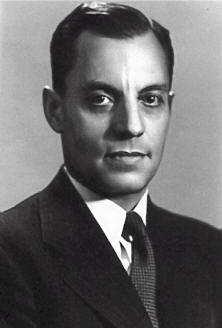
Ancel Keys is the man responsible for changing over 100 years of nutritional guidelines by suddenly, out of nowhere, claiming that FAT was bad for us and we were all dying from heart attacks caused by cholesterol. Keys is the man responsible for the "lipid hypothesis." He brought to the world his very famous
Seven Countries
Study that
"proved" that “the risk and rates of heart attack and
stroke [cardiovascular risk] both at the population level and at the
individual level was directly and independently related to the level
of total serum cholesterol.”
It is because of this gentleman that the words
“saturated fat” can’t be found far from the descriptive
“heart-clogging.” Now you might ask yourself: How does a man with a
BA in economics and political science, an MS in zoology, and a PhD
in oceanography and biology from Scripps Institute of Oceanography
get to dictate to the world our dietary requirements and
restrictions? Well, maybe because he was a pioneer in
biostatistics. Or maybe because when World War II broke out, he
helped invent K-Rations (3,200 calories packed into just under two
pounds). Or maybe it was his Starvation Studies
conducted at the University of Minnesota. You see, during WWII, Keys studied human
performance (something of interest to the military) and the effects
of testosterone on muscles. He also studied supplementation of
vitamins and minerals. Toward the end of the war, news of famine in
Eastern Europe and Asia began reaching our shores and you know scientists: You
can’t just go out and feed the starving; you have to create a study
so that you will know exactly what and how to feed them. So the
Minnesota Starving Experiment (also known as the
Minnesota-Semi-Starvation Experiment and other much nicer monikers)
started up using volunteers from conscientious objectors who
had been “inducted” into public wartime service. The war ended before the study finished, and so
the world just chipped in and sent food to the starving people who
seemed rather grateful that they didn’t have to wait for the final
results of Keys’ study before being fed. Working with diet influenced Keys and led him to
start questioning our diets' role in health, and in cardio-vascular
disease (CVD) in particular, especially when he realized that with
starvation, CVD rates declined, but with prosperity, they increased.
He felt that the American businessman was the
“best-fed” human being in history. Why should the American
businessman be dying from heart attacks with such a great diet? He quickly postulated (I’m not sure, but I think
“postulate” is Latin for “to pull something from one’s ass") that
high cholesterol was the reason for the high rate of CVD in the
American businessman and immediately started a study, the
Minnesota Businessman Study. But before the study had even been underway very
long (it was a cohort study, thus medical records were available for
the 281 businessmen in the study), he was off to Geneva to report his
findings to the World Health Organization. Did I tell you that Ancel Keys was a very
confident, brusque, and blunt sort of fellow? All accounts report that he delivered his
“hypothesis” with his usual “confidence and bluntness” and was quite
taken aback when suddenly challenged. He was challenged by an Oxford
debating expert, and when he responded,
he got
crushed. Keys then went on a working vacation that
resulted in his famous (infamous)
Seven
Country Study, and the rest is history. Well, a bit of twisted
history, actually. You see, Keys was one of the many nutritional
researchers who discovered the “Mediterranean Diet.” He found people
in Italy living into their hundreds. Many of these people were quite
poor and could hardly afford meat more than a few times a year, and
mainly during holidays. He focused on their lack of meat and animal
fats rather than on their use of olive oil, fresh vegetables and
fruits, and, of course, garlic. It was this incorrect focus that
carried his study to its conclusion.
Keys published his study and quickly found himself vindicated as
his face ended up on the cover of Time and his dietary recommendations were the talk of the town as
the American Heart Association hit the airways (television was still in its
infancy and in almost 50% of all homes) with…well, allow me to
present Wikipedia’s version: After observing in (southern Italy) the
highest concentration of centenarians in the world, Keys
hypothesized that a Mediterranean-style diet low in animal fat
protected against heart disease and that a diet high in animal fats
led to heart disease. The results of what later became known as the And this is how we became a low fat, high carbohydrate, super obese, metabolic-syndrome wracked population on statin drugs…who are dying of heart attack (and cancer) at rates never before witnessed in this country, and at rates quite a bit greater than the rest of the world that hasn’t adopted our dietary and cholesterol guidelines. A paper entitled “Cholesterol and Saturated Fat Prevent Heart Disease: Evidence from 101 Scientific Papers” by David Evans points out that the seven countries in the Seven Country study were cherry picked, as was the data. Evans concludes (as many others have) that Keys manipulated the data to come up with his results. According to a friend of Keys, Henry Blackburn, Keys was humiliated about his saturated fat theory at a World Health Organization meeting in Geneva, convened to discuss rising rates of heart disease. Keys had a strong personality and was prone to abusive scolding of anyone who disagreed with him. According to Blackburn, Keys was determined to put down his detractors, and so manipulated the data to prove himself right. Medicine quickly jumped on Keys' hypothesis, and when the government got involved, you had the untrained, uneducated (in nutrition) trying to set our nutritional guidelines. When they talked to people in the know, they learned that Keys had cherry picked his data, and that if he'd thoroughly reviewed the data he'd have gotten a different conclusion. But not understanding that, they went to another expert who happened to agree with Keys (there weren't many) and the theory was so simple that they too bought into it, and today we have completely false nutritional guidelines that are killing us off if we follow them. When I was in college, I loved my two history professors. They truly stimulated me to always question, but in the end realize that people are all the same everywhere from any time. There are many theories in history. You have Hegel’s Dialectic and the Circular Theory of History. You also have the “Great Man” Theory of History that says history is a collection of events caused by great men. Well, now we have the Great Boob Theory of History. Keys was a very smart man. He was a very creative man. But he was an injured man who would get his revenge. “I’ll teach them,” is usually the battle cry, and yes, he certainly taught us all. He taught us all the wrong things about diet and nutrition and the world loved him for it. Creating a Cholesterol Theory of Heart Disease has profited the medical industry hundreds of billions of dollars. And today Keys' "lipid hypothesis" is still just that: an unproven hypothesis. Sadly, it will take another ten to twenty years to reverse that damage this man has done to humanity, because the lies are so damn profitable. Further Reading Know Your Fats (at Weston Price Foundation) Saturated Fat Is Good For You, by Uffe Ravnskov MD
|


|
Click here to email this page to a friend.
Articles
|
Newsletter
|
Who We Are | Links
|
Search Site ©
Copyright 2014 Minnesota
Wellness Publications, Inc.
David's PhotoArt - Fine Art Supporting The International
Wellness Directory |